|
 |
|
 |
|
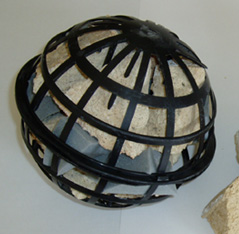
| The Filzaim (FZ-type) is composed of silica
and clay and possesses an immobilized inorganic natural enzyme. This
porous ceramic system is in fact a version of the FA type which already
has an incumbent capacity to absorb oil and fats, but the FZ-type
is further enhanced with even more cleaning capacity because of its
high density of pores, air-letting ventilation, and increased surface
dimensions (which allows it to retain more water). The result is an
ideal environment for bacteria to inhabit the ceramic and to break
down the oils and fats in the waste water. |
| |
|
|
|
 |
|
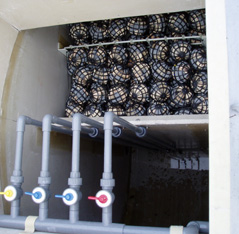
The FZ-type porous ceramic offers the important,
cost-saving advantage of being able to be retro-fitted into an existing
water treatment system without significant modifications.
The basic system will require two tanks, one for digestion and another
for absorbing the waste. However, by also installing an oil-water
separation tank, the long-run, operating-costs will be reduced. The
system is compact, easy, and provides spectacular results.
|
|
 |
|
 |
oil separate tank |
| |
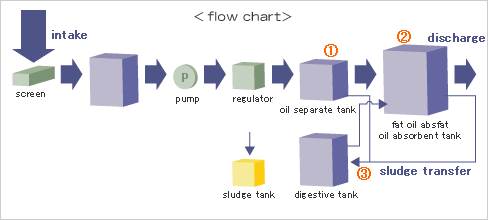
In the below diagram
the first tank separates the water from the oil, the water is
then caught and passed on to a second tank called the "fat-oil
absorbent tank". |
|
 |
fat oil absorbent tank |
| |
In this "fat-oil
absorbent tank" (tank number 2) the separated water makes
first contact with the FZ-type porous ceramic. The FZ-type porous
ceramic goes to work by breaking down the oil through a biodegradation
process. |
|
 |
digestive tank |
| |
The last stage of the
water treatment process (again see below diagram) is the digestive
tank whereby the final oil and waste water is broken down into
a sludge using a second FZ-type porous ceramic; in effect 90%
of the oil is removed from the water at this stage. What rests
is a 10% residue, of which can be easily disposed. Through this
process waste removal costs are dramatically decreased. |
|
|